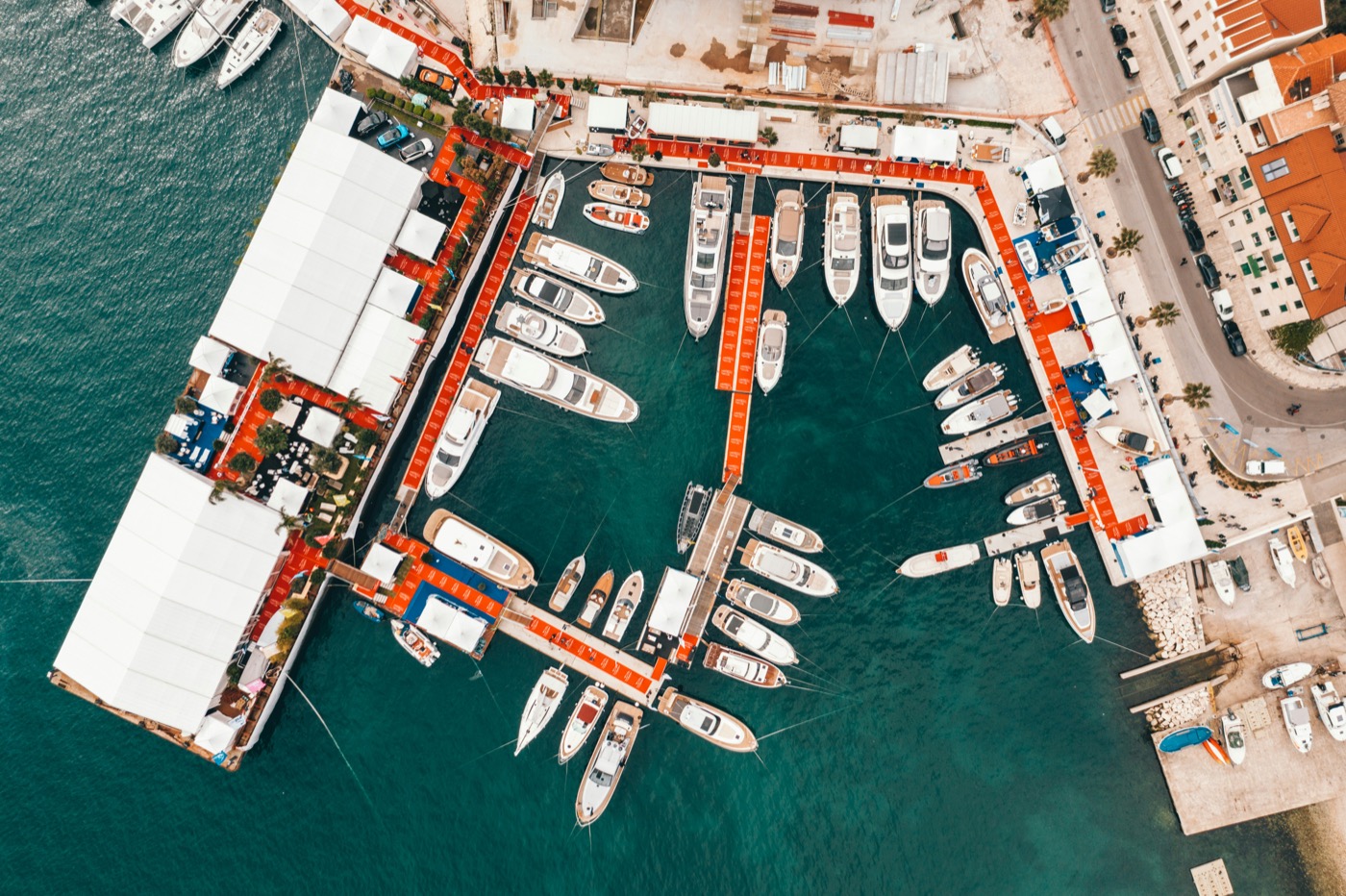
Catamarans have a unique geometry and very specific demands. Discover why marine foam is the best solution for their large decks and specific traffic zones.
Catamarans present a particular challenge for deck installation: large flat surfaces, bridging decks between the two hulls, net areas (in some models) and an expanse that means visual appearance carries enormous weight. CALNAUTIC marine foam is especially well suited to this type of vessel.
The catamaran challenge: large surfaces
A 14-metre catamaran can have up to 40 m² of deck surface spread across two hulls, the central bridge and the stern area. Covering all of that with natural teak would be economically prohibitive. Marine foam allows full coverage at a reasonable cost, with a homogeneous, immaculate visual result.
Specific zones on a catamaran
- Hull decks: main traffic zone, requires maximum grip.
- Central bridge: social and rest area, benefits from thermal comfort.
- Stern of each hull: frequent embarkation and disembarkation.
- Steps and access points: high-traffic concentration zones.
Recommended patterns for catamarans
For catamarans seeking a classic nautical look, the Teak pattern (P01) applied to both hulls in the same colour creates perfect visual continuity. For more modern designs, the Hexagonal or Diamond patterns add a technical-sporty character that fits the multihull philosophy. Whatever the pattern, we recommend keeping it uniform across all zones to maximise aesthetic coherence.
Advantages of CNC cutting for large surfaces
CNC cutting precision is especially valuable on catamarans, where surfaces are large but full of hatches, cable feeds and elements requiring precise cutouts. Each piece is designed to scale and cut to millimetre precision, ensuring a clean fit with no unnecessary gaps.